
Experience
Building websites, stores and automation since 2019 for clients in Pakistan, the UK, the US and France.
See the case studiesBrowse 139 specialist services across eleven areas, from websites and online stores to SEO, AI and automation. Pick what you need today and add more later, all delivered by one team.
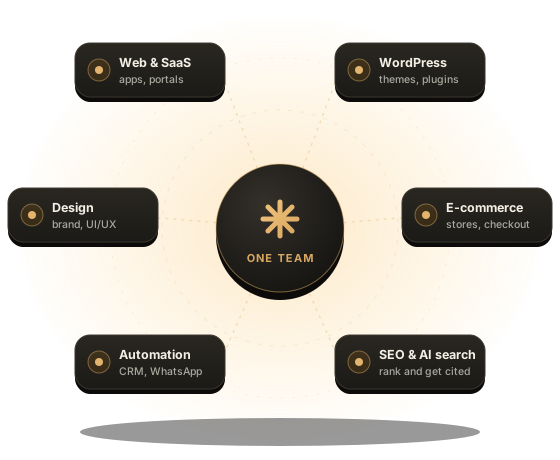
Ozairwebs builds and grows websites, online stores and web apps, then helps them get found and run smoothly. The work covers design, development, WordPress, e-commerce, SEO and AI search, automation, AI agents, marketing, mobile apps, hosting and ongoing care. You can hire us for a single job or hand over the whole website.
Pick an area to see what it covers, who it suits and every specialist service inside it.
Custom websites, web apps, portals and SaaS products built on Next.js, React and Laravel.
Best for: Startups, growing companies and teams replacing spreadsheets.
Editor-friendly WordPress sites and WooCommerce stores, extended with custom themes and plugins.
Best for: Businesses that publish often or already run on WordPress.
Online stores on Shopify, WooCommerce or Next.js, from product pages to checkout, payments and feeds.
Best for: Brands and retailers selling online in Pakistan or abroad.
Technical, local and content SEO that helps you rank in Google and get cited in AI answers.
Best for: Sites with little traffic, or traffic that never turns into enquiries.
Chatbots, AI agents and knowledge assistants that work only from data you approve.
Best for: Teams buried in repeat questions, paperwork or data entry.
Workflows that move data between your CRM, store, WhatsApp and spreadsheets on their own.
Best for: Businesses using several tools that do not talk to each other.
Logos, brand identities, UI/UX and marketing design that make a business look credible.
Best for: New brands and businesses refreshing a dated look.
Paid ads, social media, email and content campaigns tied to clear, measurable goals.
Best for: Businesses ready to grow demand once the website works well.
iOS and Android apps built with React Native or Flutter from one shared codebase.
Best for: Businesses whose customers or staff work mainly on phones.
Hosting, domains, DNS, Cloudflare and backups set up and looked after properly.
Best for: Owners unsure where their website lives or who controls it.
Ongoing care, bug fixes, upgrades and audits that keep existing sites and apps healthy.
Best for: Live websites and apps that need a dependable caretaker.
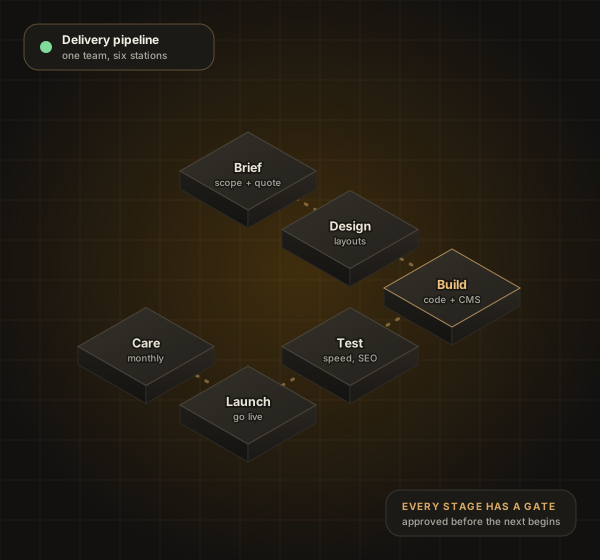
Here is a typical week across our service areas. Every task passes a check before it moves to the next stage.
Most people know the problem before they know the service. Pick the goal that sounds like you.
Your site exists but the phone rarely rings.
SEO and AI discovery I want toYou want customers to order and pay without calling you.
E-commerce engineering I want toPeople spend their day copying data between tools.
Automation and integrations I want toCustomers ask the same questions again and again.
AI systems and agents I want toPages load slowly, plugins clash or updates scare you.
Maintenance and care I want toOff-the-shelf software does not fit how you work.
Web, SaaS and softwareBefore you hire anyone for your website, check who they are and how they work. Here is where to look for us.
Building websites, stores and automation since 2019 for clients in Pakistan, the UK, the US and France.
See the case studiesWork checked against published standards: Google's Core Web Vitals, W3C WCAG 2.2 and schema.org.
Our launch standardA named founder, a public Wikidata record and open profiles that search engines can verify.
Meet the founderWritten fixed quotes, every account set up in your name and clear terms agreed before any work starts.
About the companyChoose the arrangement that suits your budget and stage. You can switch from one to another at any time.
A new website, store or app with agreed pages, features, price and timeline.
Best when you know what you need built.
Updates, backups, fixes, small changes and reports every month for a set fee.
Best for live sites that must stay fast and safe.
A focused review of speed, SEO, security or code, with a clear list of what to fix first.
Best before a redesign or when results stall.
Short answers to what people ask before picking a service.
Yes. Many clients start with one job, such as an SEO audit or a speed fix, and add more later. There is no minimum package.
Price depends on the scope. After a free consultation you get a written, fixed quote that lists what is included, so there are no surprise bills.
A business website usually takes two to four weeks, an online store four to eight, and custom apps longer. The timeline is agreed in writing before work starts.
Yes. We are based in Lahore and work remotely with clients in the UK, the US, Europe and the Middle East.
WordPress, WooCommerce, Shopify, Next.js, React, Laravel, React Native and Flutter, plus tools like n8n, Make and HubSpot. We recommend one after learning your goals.
You can move to a monthly care plan for updates, backups, fixes and reports, or take the site over yourself with full access and handover notes.
Describe what you want to fix or build. We reply with the services you actually need and a fixed quote, and nothing you do not.