
Mobile-first pages
Home, services, about, contact and service-area pages designed for thumbs first and loading in under three seconds on a mid-range phone.
Ozairwebs builds mobile-first websites for shops, clinics, consultants and local service firms, then connects Google Business Profile, WhatsApp, online booking, payments and a simple CRM so enquiries turn into customers.
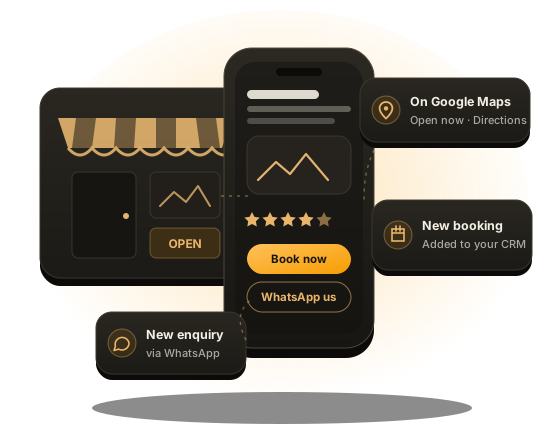
A small business website should help nearby and online customers find you, trust you and contact you in one tap. That means a fast mobile-first site, a verified Google Business Profile, clear prices or starting ranges, genuine reviews, and WhatsApp, call or booking buttons that feed a simple follow-up system.
of consumers read reviews before choosing a local business.
Reviewsnow use ChatGPT or other AI tools when checking out local businesses.
AI discoverywill not use a business that has fewer than 20 reviews.
Review volumeSource: BrightLocal Local Consumer Review Survey. Reviews and AI answers now shape the shortlist before anyone visits your site, so the site has to carry the proof.
Most small firms juggle a page builder, a Facebook page, a WhatsApp number and a spreadsheet. We join them into one system you own, built from the foundation up.
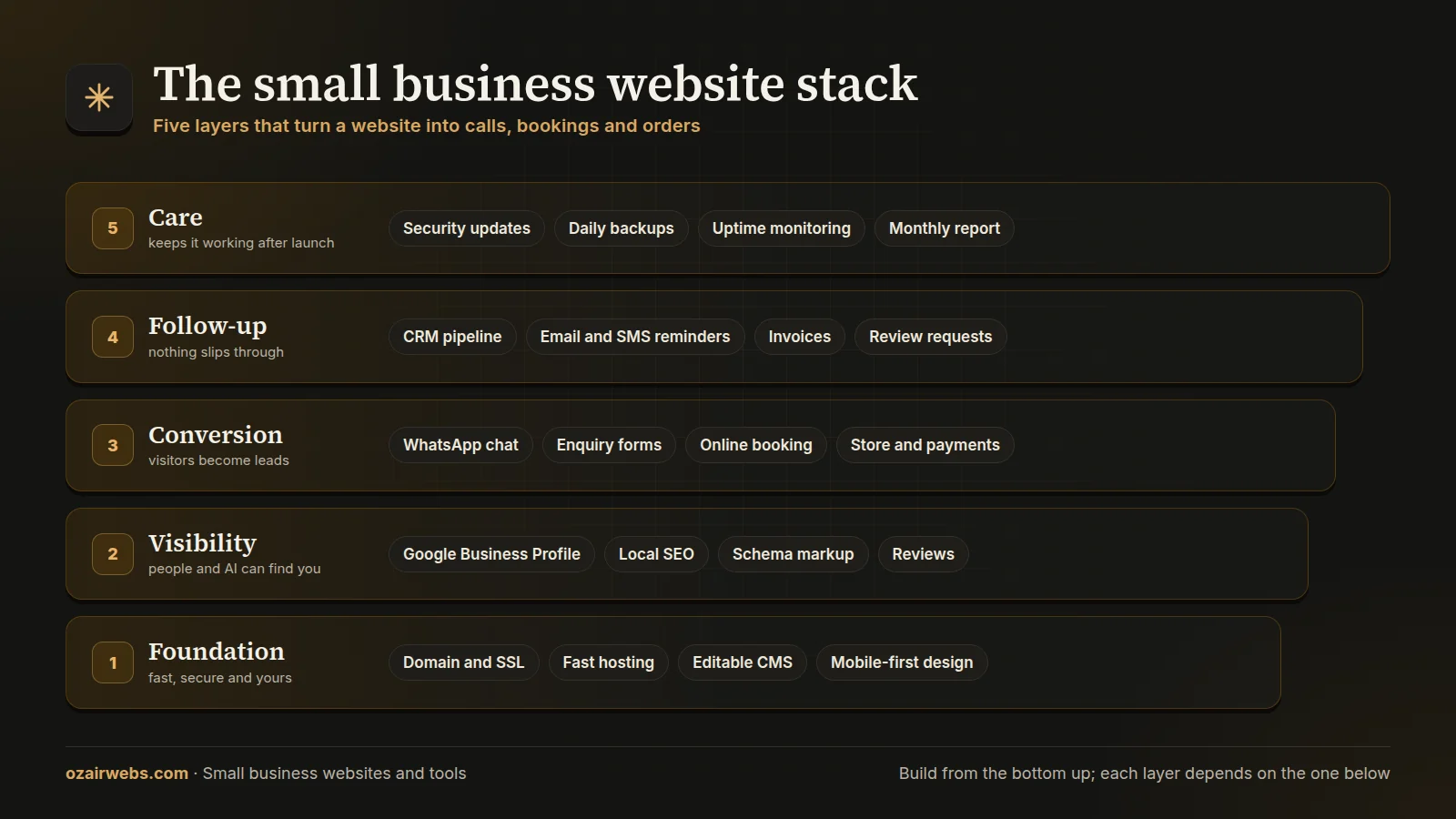
Home, services, about, contact and service-area pages designed for thumbs first and loading in under three seconds on a mid-range phone.
Profile set up or cleaned, the right primary category chosen, NAP details matched across directories and LocalBusiness schema added.
Click-to-chat, tap-to-call and a three-field form on every page, each tagged in GA4 so you know which channel brings paying work.
Appointment slots with reminders and deposits, or a compact Shopify or WooCommerce store accepting JazzCash, Easypaisa and cards.
Each enquiry lands in HubSpot, Zoho or a Google Sheet with an instant reply, a reminder for your team and a review request after the job.
Plugin and theme updates, daily backups, uptime alerts and small content edits handled every month, so the site never drifts out of date.
Start with what earns money now and add the next layer later. Every build includes SSL, GA4, Search Console and a recorded handover.
| Feature | Starter presence | Lead engine | Store and automation |
|---|---|---|---|
| Best for | New or single-location businesses that mainly need to be found and called | Service firms that run on enquiries and appointments | Shops and brands selling products or packages online |
| Typical size | 5 to 7 pages | 8 to 15 pages plus service-area pages | Catalogue, product pages and checkout |
| Key features | Business Profile setup, WhatsApp and call buttons, contact form | Starter features plus booking, CRM, review requests and a blog | Lead engine features plus payments, stock and order emails |
| Usual platform | WordPress or Wix | WordPress or Next.js | Shopify, WooCommerce or Next.js |
| Typical timeline | 2 to 3 weeks | 4 to 6 weeks | 6 to 10 weeks |
| You manage | Text and photos in the CMS | Posts, offers and incoming leads | Products, orders and inventory |
Prices depend on pages, features and how much content is ready. You receive a written, fixed quote after a short discovery call.
A good small business site is measured by enquiries and repeat orders, not page views. Each step below has a number you can track.
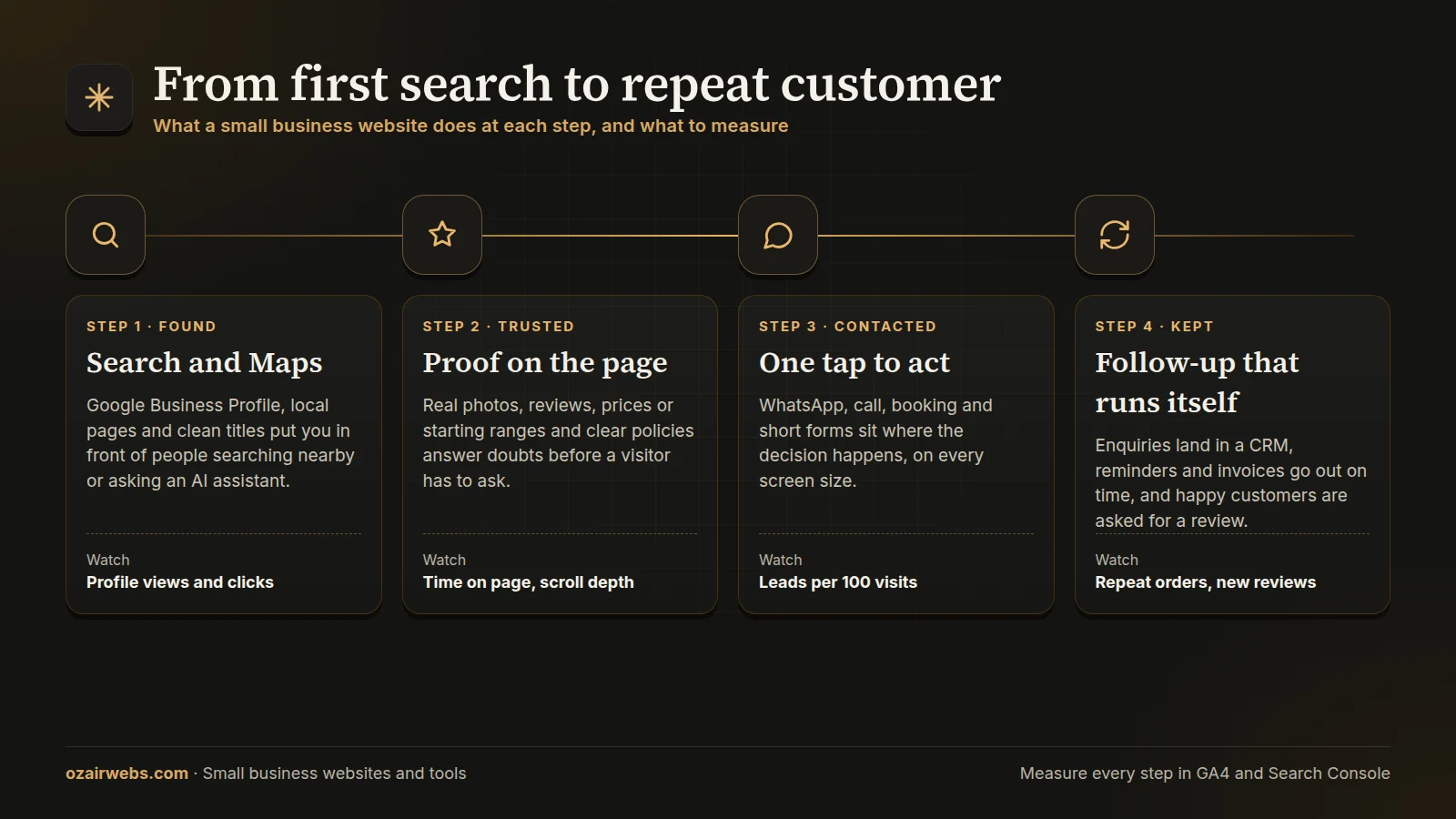
Shows up in Google Search, the Maps pack and AI answers for “near me” and service queries.
Visitors see real work, recent reviews, starting prices and policies before they decide.
A single tap opens WhatsApp, a phone call or a booking slot, with no long forms.
Automatic follow-up, invoices and review requests bring customers back for the next job.
These five issues cost more enquiries than design ever does. Each one is checked in the first audit call.
A heavy page builder that crawls on phones
A lean theme or Next.js build, compressed images and passing Core Web Vitals
Different address and phone on Facebook, Google and the site
One NAP record matched everywhere and marked up with schema
Contact only through a form buried at the bottom
WhatsApp, call and booking buttons visible on every screen
Enquiries lost across personal inboxes and DMs
One CRM inbox with owners, reminders and a clear status for each lead
Nobody updates plugins or content after launch
A monthly care plan with backups, updates and a short report
Owner-run brands and specialist firms with the same needs: be found, look credible and make it easy to buy or enquire.
A natural food brand in Pakistan selling pantry and personal-care products online.
What matteredClear product facts, simple ordering and a CMS the owner runs daily.
Read the case study Shopify storefrontA focused shop for arranging gifts and charitable acts in Makkah and Madinah.
What matteredTrust signals and a respectful checkout for buyers abroad.
Read the case study Service websiteA Lahore consultancy explaining twelve fire and life safety services.
What matteredTechnical services turned into pages clients understand and act on.
Read the case studyStraight answers to what owners ask before starting. Prices and timelines are typical ranges, not promises.
According to GoDaddy's Pakistan pricing guide, a basic site typically costs PKR 15,000 to 50,000 and a professional build PKR 100,000 to 350,000, plus yearly domain and hosting. Ozairwebs gives a fixed written quote after a short call, based on pages, features and ready content.
Around two to three weeks for a five to seven page site, four to six weeks with booking and a CRM, and six to ten weeks for an online store. Most delays come from missing photos, prices or service details, so a content checklist arrives on day one.
Yes. Social pages are rented space where reach changes without notice, and search engines and AI assistants rarely cite them for service questions. A site you own holds your prices, service areas, reviews and booking, and it is where your Google Business Profile points.
WordPress suits content-led service firms that want full control. Shopify suits product sellers who want managed checkout and apps. Wix suits very small sites edited by the owner alone. The recommendation follows your products, budget and who will update the site.
Yes. A WhatsApp chat button, one-tap calling and an online booking calendar with reminders are standard, and deposits can be taken at booking. Each action is tracked in GA4, so you can see which one produces paying customers.
Nobody can guarantee placement. A verified Business Profile with the right primary category, which Whitespark's experts rank as the top local pack factor, consistent NAP details, LocalBusiness schema and fresh reviews give you the strongest chance in Maps, ChatGPT and Gemini.
You can edit text, photos, prices and posts yourself in the CMS, and a short training video is recorded at handover. Security updates, backups and larger changes are covered by an optional monthly care plan.
Yes. Enquiries and orders can flow into HubSpot, Zoho, Google Sheets or accounting tools through native connectors, n8n or Make, so contact details are never retyped and follow-ups send on schedule.
Sources: GoDaddy, website cost in Pakistan and Whitespark Local Search Ranking Factors.
Share what you sell, where your customers are and how they reach you today. You get a recommended build, a timeline and a written quote.