About Ozairwebs

Engineering the product, workflow and growth system together.

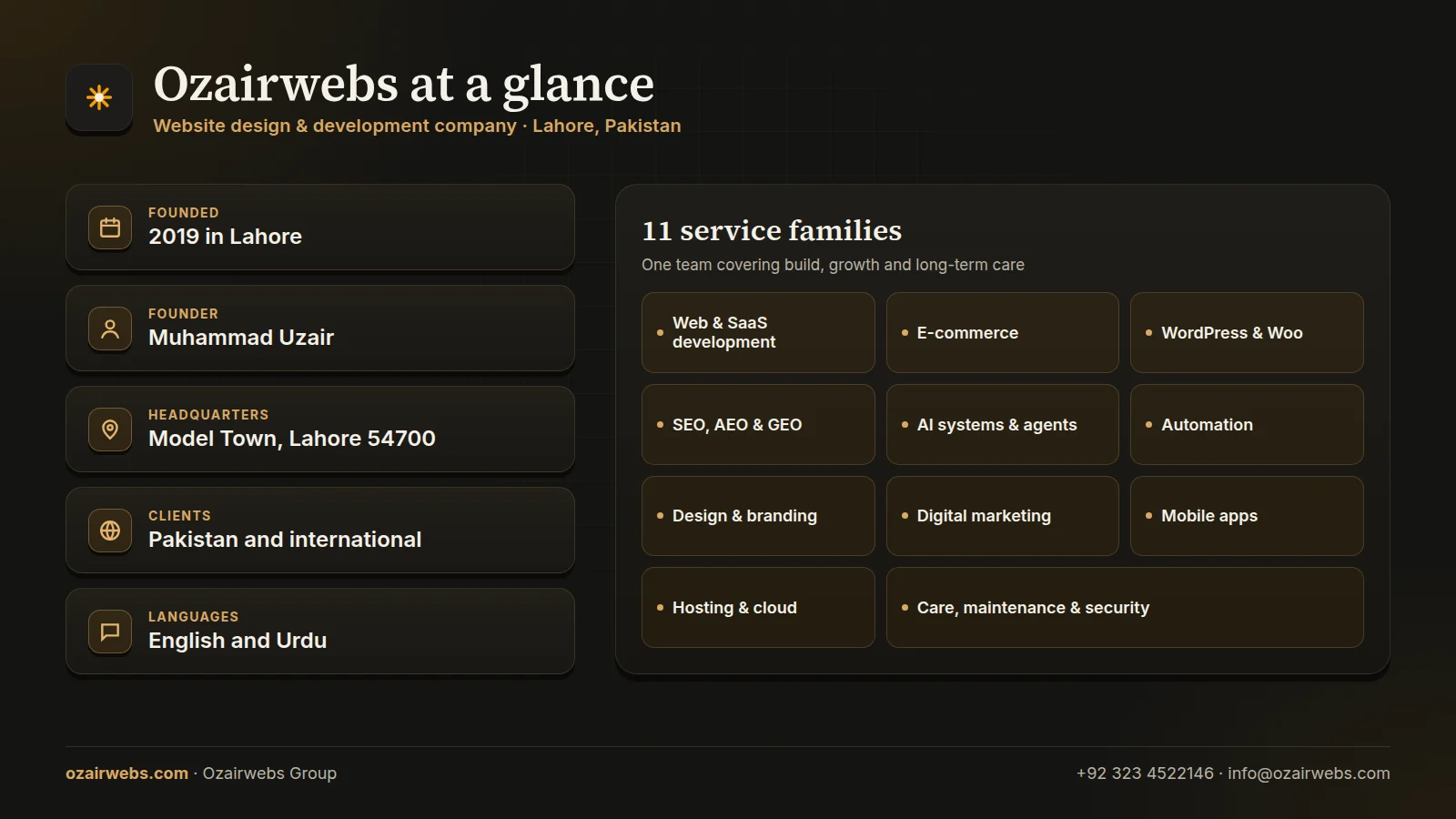
Ozairwebs is a digital development company working across AI, software, web platforms, e-commerce, automation, design and search. We help organizations turn disconnected requirements into systems that are understandable to users and maintainable by the teams who own them.

What we do

One delivery partner across connected digital work.

A website, application or automation rarely operates alone. We consider the content, data, integrations, permissions, user experience and support model that make the visible interface useful.

01

AI and automation

Agents, knowledge assistants, model integrations and workflows connected to approved data and controlled business actions.

02

Web and software

Next.js, SaaS, portals, custom applications, migrations and maintainable features built around real users and records.

03

Commerce and WordPress

Shopify, WooCommerce, catalogs, checkout, integrations, custom themes, plugins and editor-friendly publishing systems.

04

Search and growth

Technical SEO, content architecture, AI discovery, analytics, design and campaigns connected to a measurable customer journey.

Connected capabilities

Depth where the project needs it.

The engagement can remain focused on one specialist service or combine disciplines when they share a genuine system boundary.

01

AI systems

Grounded assistants, agents, document intelligence and AI features with evaluation, permissions and human review.

02

Custom software

Web applications, SaaS platforms, portals, dashboards, APIs and databases shaped around roles and business rules.

03

E-commerce

Shopify, WooCommerce and custom commerce covering catalog, checkout, product data, feeds and operations.

04

Automation

Reliable workflows across CRM, content, commerce, databases and third-party APIs with visible exception handling.

05

Experience design

Information architecture, UI/UX, responsive behavior, design systems and content structure connected to implementation.

06

Search and growth

Technical SEO, AEO, AI discovery, structured data, analytics and campaigns based on useful content and measurable journeys.

How we work

Decisions stay connected from discovery to handover.

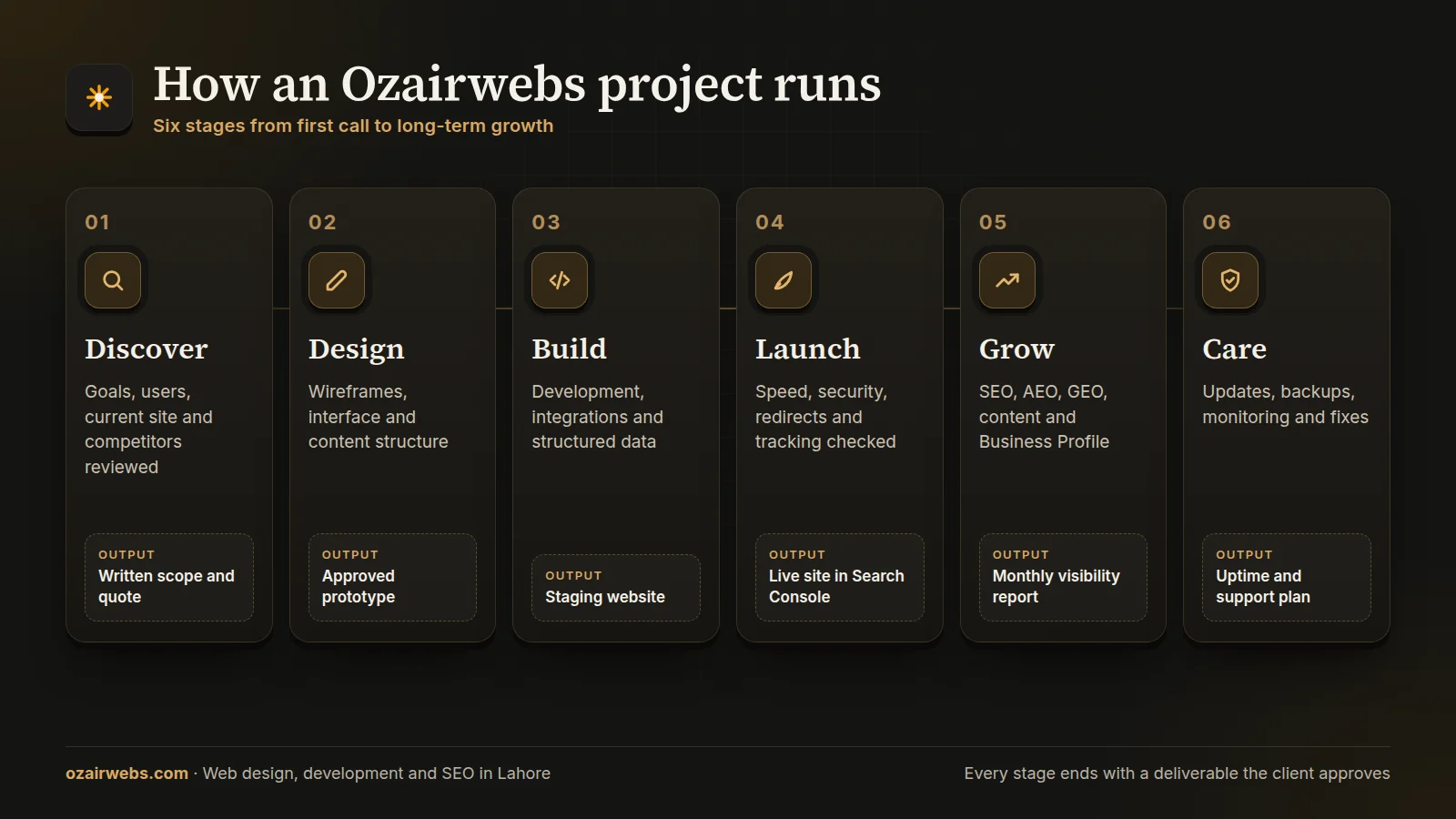
We start with the operating problem, test important assumptions early and deliver in reviewable stages.

01

Understand the current state

Review representative users, content, records, systems, constraints and evidence before prescribing a platform.

02

Define the right boundary

Separate what must change from what should remain stable, then document responsibilities and acceptance criteria.

03

Build in working stages

Expose technical and content risk through usable increments instead of postponing integration until the end.

04

Transfer ownership

Launch with documentation, monitoring, recovery expectations and a clear path for support or independent ownership.

Experience and trust

Evidence without inflated claims.

Public case studies explain real platforms and operating contexts. Recommendations distinguish verified facts, project assumptions and decisions that still require discovery.

Direct technical context

Important decisions remain close to the people responsible for architecture and implementation.

Platform-aware delivery

We work with Next.js, React, Node.js, Laravel, WordPress, WooCommerce, Shopify, automation platforms and AI APIs when they fit.

People-first content

Content is written to help visitors make a decision, supported by semantic structure rather than manufactured keyword repetition.

Responsible scope

We recommend a focused repair, integration or staged migration when it creates more value than a complete rebuild.

Common client questions

Answers for evaluating the right approach.

These questions cover service fit, scope, integrations, cost, quality and ownership for the subject being evaluated.

Which business or user outcomes should be defined first?

The work should solve a defined user or operating constraint. A useful engagement examines strategy, user journeys, content, data, integrations, delivery quality and accountable ownership. The recommendation may be a focused improvement, integration or modernization rather than a larger rebuild when that produces a safer and more maintainable result.

Which deliverables belong in a project involving software and web development team?

The scope can include discovery, architecture, experience and content decisions, implementation, representative testing, deployment and documented handover. Each deliverable should be tied to an acceptance condition and a named owner instead of being treated as an isolated feature checklist.

How should a company compare providers for AI and automation expertise?

Compare relevant evidence, proposed responsibilities, technical fit, communication, security, testing and support. Ask how assumptions will be validated, how risks will be reported and who owns the system after launch. A short risk-first phase can be more informative than a generic proposal.

Can an existing website or business system be extended with e-commerce development partner?

Often, yes. The current platform, records, APIs, permissions and critical journeys should be reviewed before deciding whether to extend, integrate, migrate or replace anything. Valuable URLs, content, data and operating behavior should be protected with explicit checks.

What affects the cost of global digital delivery?

Cost depends on scope, content and data readiness, integrations, security, migration risk and the level of testing and support required. A reliable estimate follows enough discovery to identify dependencies and acceptance criteria; a fixed number without that context can hide exclusions or change risk.

What affects the timeline for technical product partner?

Timing varies with scope, feedback cycles, third-party approvals, content readiness and technical uncertainty. A credible plan separates discovery, design, implementation, quality assurance and launch, then shows which activities can safely run in parallel.

How should quality, security and performance be planned?

Relevant requirements are defined before implementation and tested on representative users, devices, records and failure conditions. Depending on the project, this can include accessibility, permissions, data validation, responsive behavior, performance budgets, logging, recovery and crawlable public content.

What support and ownership are needed after launch?

Post-launch work can include monitoring, issue response, updates, analytics review, prioritized improvements or a documented handover. Ownership, backup and recovery expectations, service boundaries and escalation paths should be agreed before release.

Start with the real constraint

Tell us what needs to work better.

Share the current product, workflow or growth objective. We will help identify the most useful next step and the evidence needed to scope it responsibly.

Contact Ozairwebs