Start a project

WordPress & WooCommerce engineered as one connected capability.

Editor-friendly WordPress systems extended with clean custom engineering where off-the-shelf tools stop. Keep publishing simple while making WordPress support the business logic the project actually needs.

Who this service family is for.

Organizations that value an editor-friendly CMS but require cleaner themes, custom features, integrations and dependable maintenance.

  • You can provide current content types, roles and editorial pain points.
  • You can provide active theme, plugin and hosting constraints.
  • You can provide custom business rules and integrations.
  • You can provide update, security and recovery expectations.

What a responsible engagement produces.

Keep publishing simple while making WordPress support the business logic the project actually needs.

  • structured editor-friendly content
  • focused theme and plugin boundaries
  • observable imports and integrations
  • safer performance and maintenance routines
Complete service directory

Specialist wordpress services, logically connected.

Each page explains its purpose, benefits, use cases, workflow, technologies, FAQs and related services.

Capability system

Six disciplines that strengthen each other.

Keep publishing simple while making WordPress support the business logic the project actually needs.

01

Content model

Give editors structured fields and purposeful blocks instead of forcing every page into an ungoverned canvas.

02

Theme engineering

Keep templates lean, semantic, accessible and aligned to the real content hierarchy.

03

Plugin boundaries

Put business logic in focused, documented extensions rather than fragile snippets or theme files.

04

Data connections

Map imports, APIs and webhooks with validation, deduplication, logs and recovery rules.

05

Performance and safety

Review queries, media, caching, access, updates and third-party scripts as one operating concern.

06

Editorial ownership

Simplify roles, previews, publishing states and routine maintenance for the team that runs the site.

Architecture choices

Choose the right level of wordpress investment.

The route follows the current system, the operating need and the ownership available after launch.

WordPress & WooCommerce delivery model comparison
ApproachHow it worksBest fitTrade-offs
ConfigurationUse supported core, block and plugin behaviorCommon publishing requirementsLeast control over unique behavior
Custom themeOwn templates, components and frontend deliveryDistinct brand and content architectureRequires disciplined maintenance
Custom pluginImplement business logic outside presentationImports, workflows and platform extensionsNeeds testing across WordPress updates
Headless frontendKeep WordPress as CMS and change presentationFrontend performance or product UX needsPreview, caching and two-system ownership increase
Common project signals

When to consider wordpress & woocommerce.

These are starting points for discovery, not assumptions about the final solution.

01

Build a custom editorial website

This signal is explored through content model and measured through editor task time.

02

Create a business-specific plugin

This signal is explored through theme engineering and measured through template and query performance.

03

Extend WooCommerce behavior

This signal is explored through plugin boundaries and measured through successful update and regression checks.

04

Import and synchronize external records

This signal is explored through data connections and measured through import and integration accuracy.

05

Improve WordPress performance

This signal is explored through performance and safety and measured through editor task time.

06

Modernize the admin experience

This signal is explored through editorial ownership and measured through template and query performance.

Delivery model

From current state to a system the team can own.

Six stages keep scope, decisions, quality and handover visible.

  1. 01

    Understand the operating reality

    Review users, journeys, data, current tools, constraints, risks and the business result that must improve.

  2. 02

    Define the service boundary

    Agree what is in scope, what remains external, who owns each decision and how success will be accepted.

  3. 03

    Design the system

    Shape the experience, content, architecture, records, integrations, states and recovery behavior before expensive implementation.

  4. 04

    Build in reviewable slices

    Implement the highest-risk path early, share working increments and keep decisions visible in the code and documentation.

  5. 05

    Validate real conditions

    Test accessibility, responsive behavior, data quality, permissions, performance, failures and representative edge cases.

  6. 06

    Launch, transfer and improve

    Release with monitoring, ownership, handover and a prioritized improvement path grounded in observed use.

  1. 01

    Share the context

  2. 02

    Confirm the fit

  3. 03

    Shape the plan

Make the system easier to own

Make WordPress & WooCommerce easier to understand, use and scale.

Share the current system, desired outcome and important constraints. We will respond with a practical route forward and the questions needed to scope it responsibly.

Start a conversation
Common client questions

Answers for evaluating the right approach.

These questions cover service fit, scope, integrations, cost, quality and ownership for the subject being evaluated.

What is included in custom WordPress development?

A custom WordPress engagement can cover information architecture, editor-friendly content types, theme development, plugin functionality, API integrations, accessibility, technical SEO, performance and deployment. The useful scope depends on what editors and visitors need to accomplish, not on installing a fixed bundle of plugins.

When does a business need a custom WordPress theme?

A custom theme is appropriate when the brand, page system, responsive behavior, accessibility or performance requirements cannot be handled cleanly by an off-the-shelf theme. It should use reusable templates and components so future editors can publish consistently without rebuilding layouts.

Can you build custom WordPress plugins and integrations?

Yes. Custom WordPress plugin development can connect business APIs, automate publishing, manage structured records or add workflow-specific features. The plugin should use WordPress permissions, validation, upgrade-safe code and documented ownership rather than placing critical logic inside a theme.

What does WordPress maintenance include after launch?

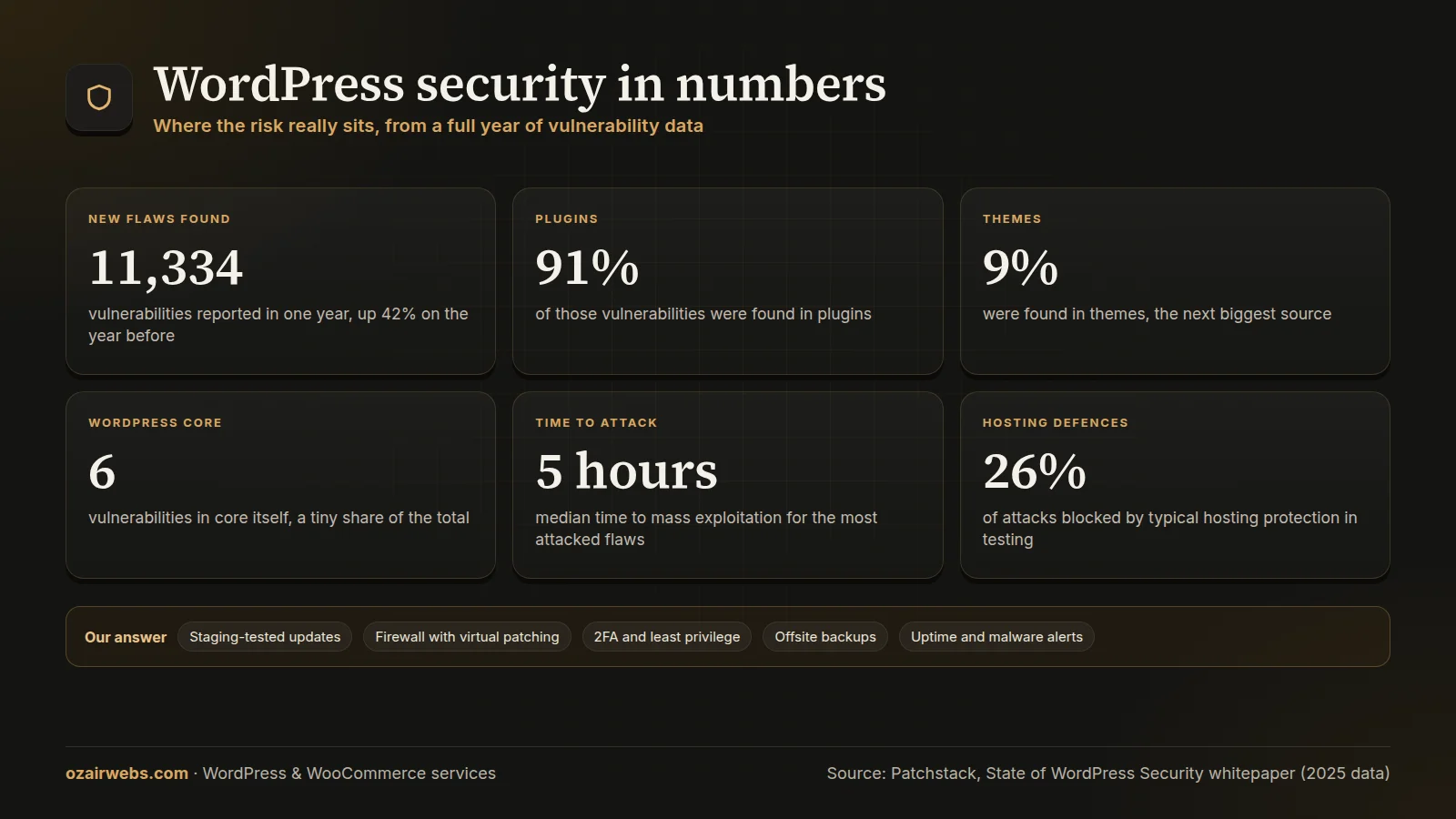
WordPress maintenance can include tested core and plugin updates, backups, uptime monitoring, security review, performance checks, error investigation and small improvements. The exact support boundary, response expectations and recovery process should be agreed before the site goes live.

What is included in WooCommerce store development?

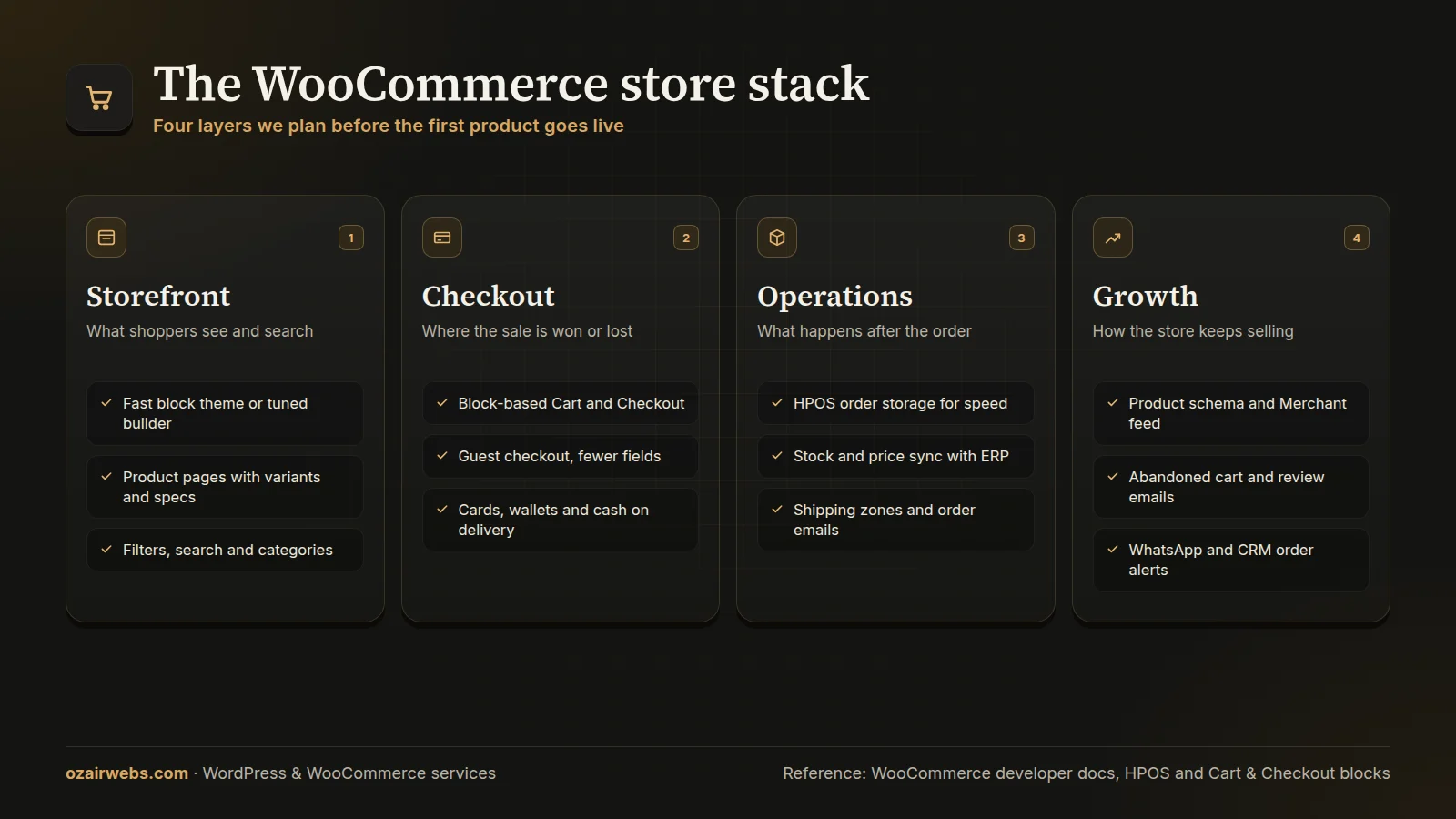
WooCommerce store development can include catalog and variation architecture, custom product templates, checkout configuration, payment and shipping integrations, order workflows, analytics, structured product data and performance work. The scope should follow the actual catalog and fulfilment model.

Can WooCommerce be customized for unusual products or workflows?

Yes. WooCommerce customization can support subscriptions, bundles, complex variations, quote requests, custom pricing, product add-ons, regional checkout rules and operational integrations. The safest approach extends supported hooks and APIs and keeps business rules testable and upgrade-aware.

When is a custom WooCommerce plugin better than several extensions?

A custom WooCommerce plugin is often justified when one stable business rule would otherwise require overlapping extensions, fragile snippets or repeated manual work. Existing supported extensions should still be evaluated first because custom code creates an ongoing testing and maintenance responsibility.

How do you improve WooCommerce speed and conversion?

WooCommerce optimization starts with real catalog, search, cart and checkout behavior. Work may cover hosting, caching, queries, images, scripts, product information, mobile interaction, checkout friction and failed-payment recovery. Performance and conversion should be measured together instead of optimizing an empty benchmark page.