
Business websites
Service sites and landing pages that open fast on any phone and guide visitors toward a call, a form or WhatsApp.
Next.js development servicesOzairwebs designs and develops Next.js websites and online stores that load quickly on mobile, are easy for Google and AI assistants to read, and come with a custom CMS dashboard your team can run without a developer.
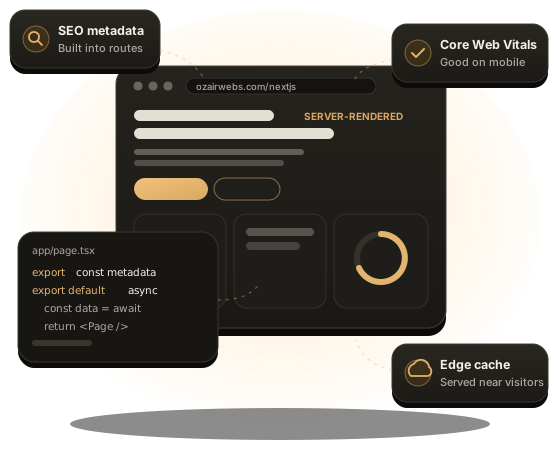
Next.js is a React framework that prepares each page on the server, so visitors and search engines receive complete HTML instead of a blank screen waiting for JavaScript. It is a strong choice when speed, SEO and room to grow into a store, portal or app all matter. Ozairwebs delivers every Next.js website with its own CMS, so your team stays in control of the content.
Usage figures: Stack Overflow Developer Survey 2025, web frameworks, all respondents.
Each project starts from the business goal, then picks the rendering, content model and integrations that serve it.
Service sites and landing pages that open fast on any phone and guide visitors toward a call, a form or WhatsApp.
Next.js development servicesCustom catalogues with variants, pack sizes, guest checkout and cash on delivery, without monthly platform fees per sale.
The SadaPure storeAn admin panel shaped around your content: pages, posts, products, media and SEO fields in one place.
What the CMS includesA Next.js front end on top of WordPress or another content source, so editors keep their tools while pages get faster.
WordPress expertiseLogins, roles, dashboards and data from your APIs, built in TypeScript for products that keep growing.
Web and SaaS softwareWordPress, Wix or old React sites moved across with every URL mapped, content carried over and rankings protected.
WordPress to Next.jsChange a price, publish a post or swap a banner yourself. No developer ticket, no waiting, and the public pages stay fast.
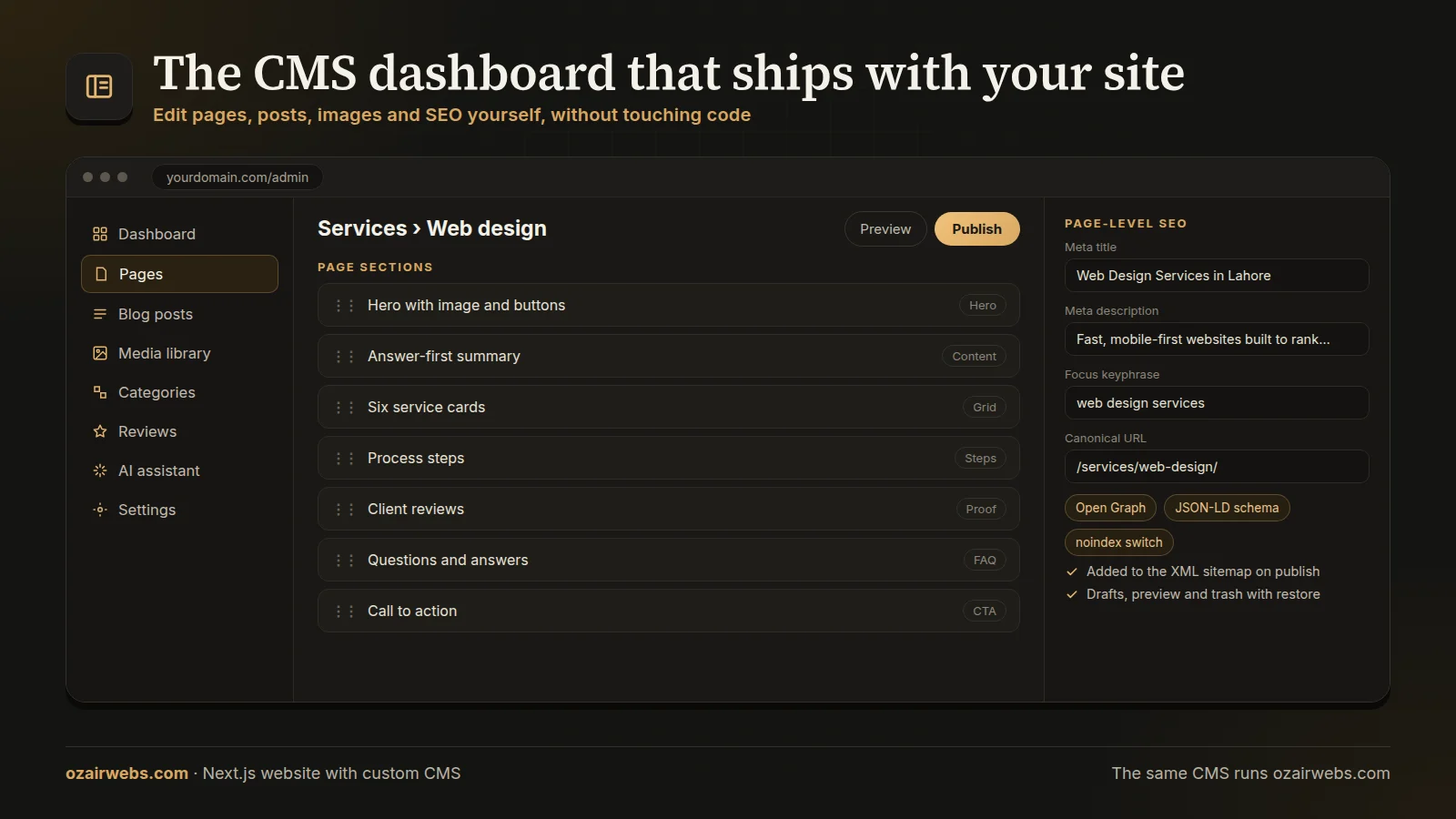
Live proof: this page and the rest of ozairwebs.com are edited in the same CMS.
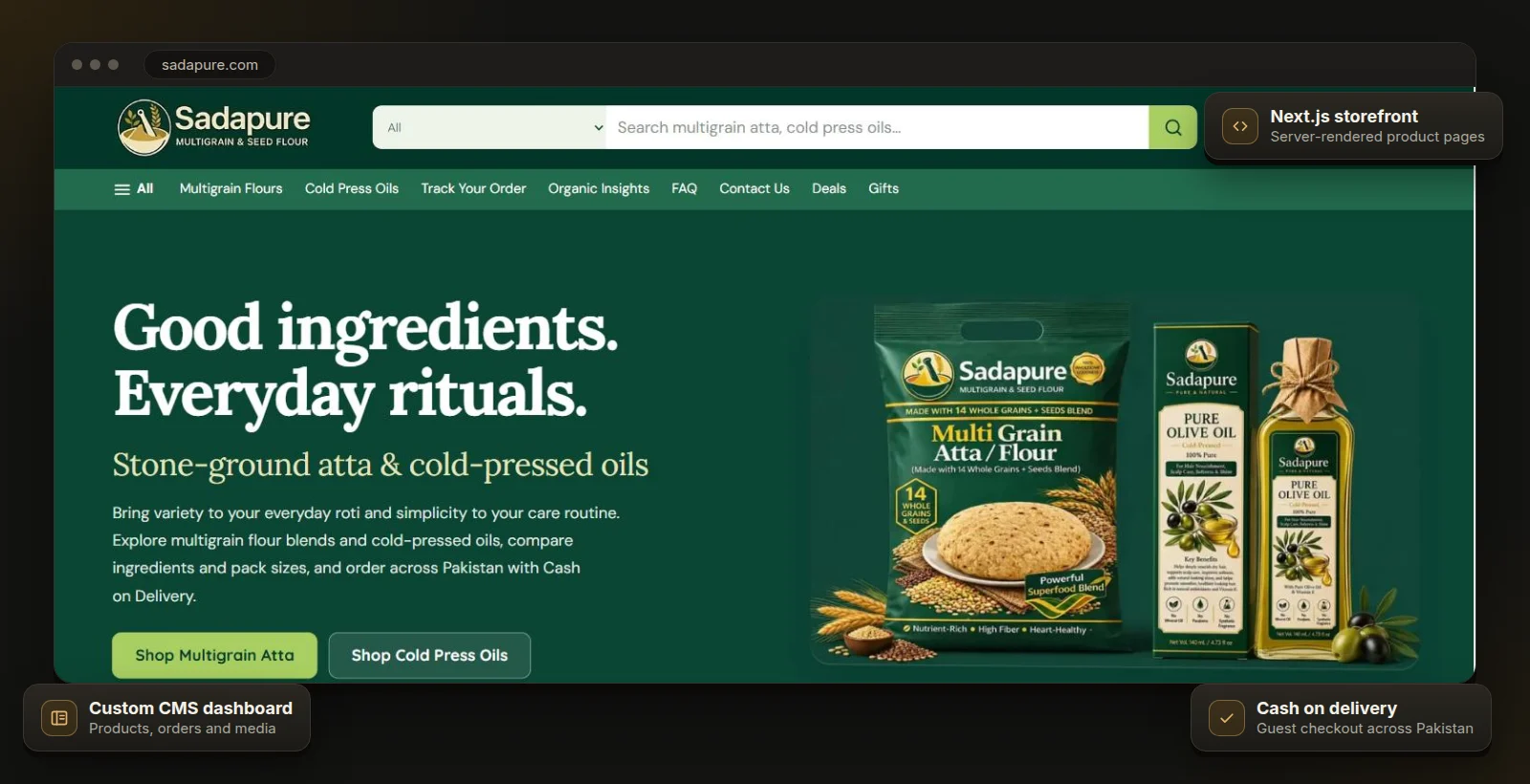
A natural food brand in Pakistan selling multigrain atta and cold-pressed oils. The storefront and the admin dashboard were both built by Ozairwebs in Next.js.
One Next.js site can serve some pages as static files and build others live. Choosing well is where most of the speed comes from.
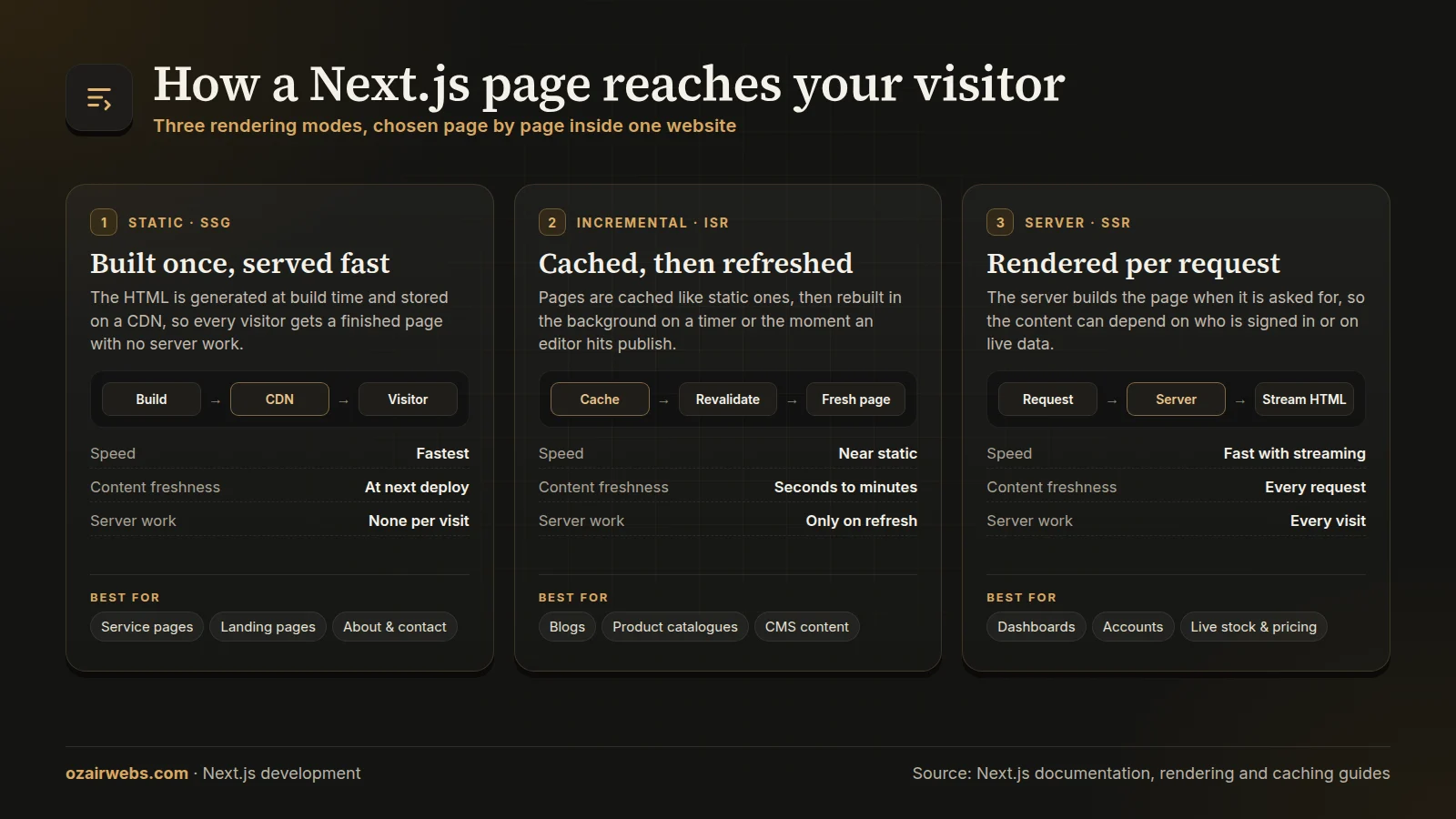
use cache directive let one page combine cached and live parts.Reference: Next.js docs, caching and revalidating.
Rankings in Google and mentions in ChatGPT or Perplexity both start with a page that crawlers can read in full.
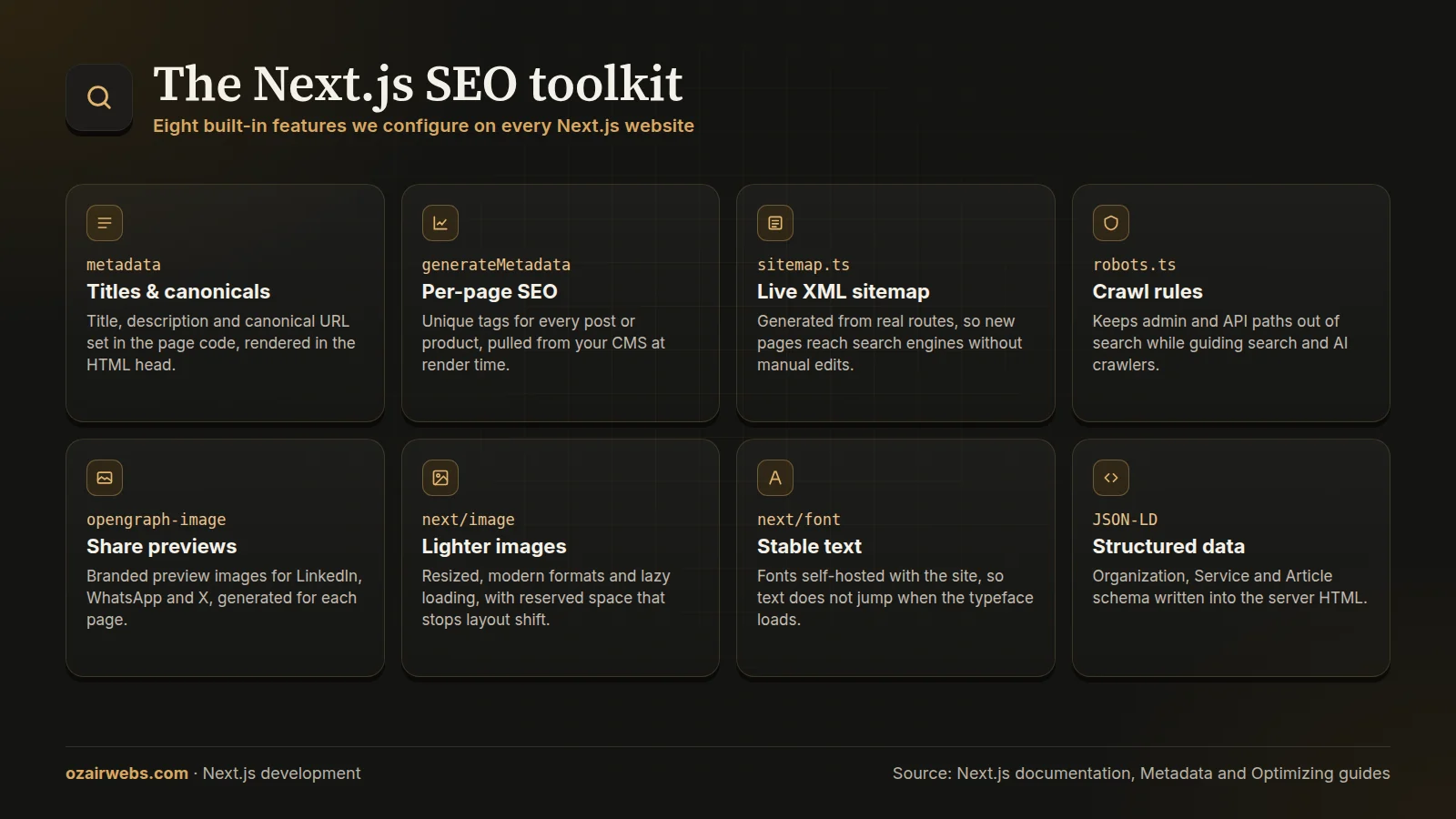
Sources: Vercel, The rise of the AI crawler and Next.js docs, metadata.
Every platform has a place. This table shows where Next.js wins and where another tool may suit you better.
| Criteria | Next.js with our CMS | WordPress | React single page app | Wix or Squarespace |
|---|---|---|---|---|
| How pages load | Finished HTML from the server or cache | Built by PHP on each visit unless cached | Blank shell filled in by JavaScript | Hosted pages from the builder |
| Mobile speed | Fast by default when built well | Depends on theme and plugins | Slow first load on weaker phones | Fair, with limited tuning |
| SEO and AI crawlers | Full control, content in the HTML | Strong with a good SEO plugin | Weak unless extra rendering is added | Basic settings only |
| Editing content | Custom dashboard made for your site | Familiar editor with many plugins | Needs a developer or a CMS added | Easy drag and drop |
| Security upkeep | Few moving parts to patch | Core, theme and plugins to update | Dependencies to update | Handled by the platform |
| Best when | Speed, SEO and growth into apps or stores matter | You need a large plugin ecosystem | It is an app behind a login | Budget is small and needs are simple |
Six stages, each closed by a clear gate, so you always know what is finished and what comes next.
Goals, pages, products and integrations mapped into a written scope.
Mobile-first layouts for key pages, reviewed on real phones.
Next.js and TypeScript development with the CMS on a staging link.
Copy, images, metadata, schema and redirects loaded into the CMS.
Domain, hosting, analytics and Search Console connected and tested.
Framework security releases, backups and small edits each month.
Straight answers to what business owners ask before choosing Next.js.
Yes. Pages arrive as complete HTML, metadata and sitemaps are generated in code, and images and fonts are optimised for Core Web Vitals. Good SEO still needs strong content and links, but Next.js removes the technical barriers.
Yes. Every Ozairwebs build includes a custom CMS dashboard where you manage pages, blog posts, images, reviews and the SEO fields of each page, then preview and publish.
Choose WordPress when you rely on its plugin ecosystem or a very standard blog. Choose Next.js when speed, search visibility, custom features or future growth into a store or web app matter more.
Yes. SadaPure is one example: a Next.js store where shoppers pick pack sizes, pay on delivery and track orders, while the owner runs products and orders from a private dashboard.
Cost depends on the number of page templates, CMS features, integrations and content. After a short discovery call you receive a written fixed quote with scope and timeline, so there are no surprise invoices.
It can run on Vercel, on a managed Node.js host or on your own server. We recommend the option that fits your traffic and budget, and every account is created in your name.
Yes. We crawl the old site, map every URL to its new address with 301 redirects, keep titles and content intact and watch Search Console closely after launch.
Next.js publishes security releases when issues are found. On a care plan we apply them promptly, update dependencies, keep backups and monitor uptime, so the site stays safe and fast.
Share your pages, products or current site. You will get a clear plan, a fixed quote and a CMS your team can run from day one.